

Why marry?
When you could stay single and do what you want.

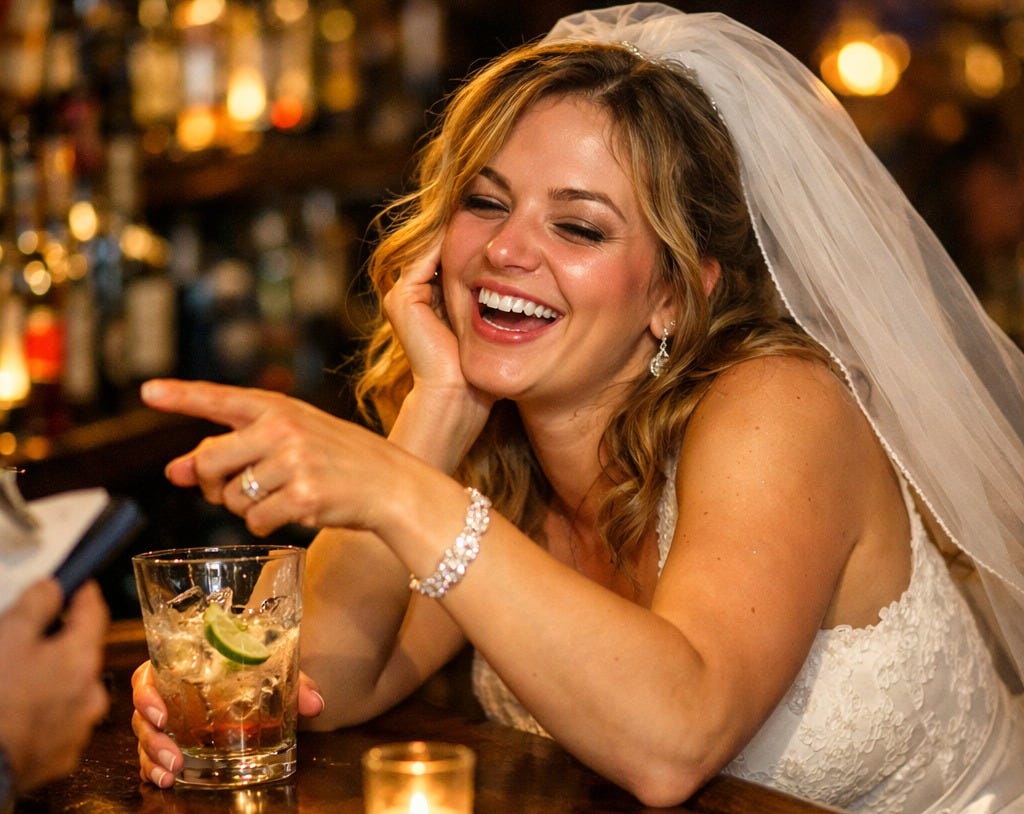
For a time, in my twenties, I was a reporter for a big-city paper, assigned to cover the U.S. Congress, among other news-making institutions. It was a great job and I was glad to have it, and the buzzy social life that went with it. But I was also single and lonely, and dating in DC could be cold.
I remember a day when I glided into the Capitol building on my press pass, alongside a long line of tourists who waited to enter. My gaze landed on a middle-aged couple of unremarkable appearance.
They were bantering easily with each other, while a couple of kids scuffled beside them. His arms were wrapped around her, and she leaned on him.
They were comfortable, and close.
As I swept past them, I was stabbed by frustration. How do they have this, I wondered? What’s so special about her? What’s special about him?
This incident came back to me when I read the Valentine’s Day post in Tough Love, Abigail Shrier’s new advice column in The Free Press.
The letter Shrier answered was from a 30-year-old woman who had just ended an unsatisfactory four-year relationship. Now the letter-writer is “happily single,” and rhapsodizes over the life: “I have a successful career, make good money, live in a desirable neighborhood with my cute and companionable dog, and have best friends who are also single,” she writes. “I travel, enjoy sporting events, go to exercise classes, drink cosmos, run marathons, and spend lots of time out in the city with friends.”
And yet…and yet…
The letter-writer also finds herself dreaming of “a partnership and being a parent.” Dating is awful, and she now thinks she never loved the boyfriend who consumed the past four years of her life. But she thinks about love, and worries she “will never feel that transcendent feeling that so many people talk about.” Is there hope, she asks?
Shrier’s answer is long, but the gist of it is that instead of cherishing her convenient and independent life, the LW should open her heart to the inconvenience and dependence of loving and marrying a specific man.
To find this marriageable man, she says the LW should get off the apps, and start “accepting setups and meeting young men out in the world.”
So far, so good. But while her answer is interesting, nowhere does Shrier get to the meat of the matter, which is that marriage can save the LW from what could otherwise become a trivial life.
Marriage has this power because it’s a serious commitment—the most serious commitment most of us will ever make.
To marry is to pull your oar for the human family, by committing to love one person, unselfishly, through thick and thin, as he will commit to you. The couple enlarges this commitment when they become a family, and raise children.
Of course, marriage-and-a-family isn’t the only serious way of life. Some people commit themselves to art, for instance, or good works, or professions that provide urgent services to others. Untold millions make a daily commitment to religious teachings and practices that lift them out of themselves, and connect them to other people and transcendent ideals.
But most of those people are called to those paths early in life. Never say never, but given that the LW is 30, and so far her vision of the good life is to “eat exactly what I want” and “play Joni Mitchell at full volume,” she’s probably not one of them.
I mean no insult! The truth is, most of us aren’t. The beautiful thing about family is it offers a deeply meaningful life to ordinary people.
Even the least heroic among us can, for our families, achieve feats of care, empathy, and generosity we could not hope to approach any other way.
It helps that those for whom we act are flesh of our flesh and bone of our bone. That’s literally true, for biological children, but it’s true, too, for spouses and adopted children, because that’s the promise we made them when we made them our families.
Ever wander through a cemetery? Please look for a headstone that reads: “Here lies Emily. She made SVP.”
No luck? Try: “She enjoyed a night out on the town.”
But you won’t be able to count the stones that read “Devoted Wife,” or “Loving Mother.” You may also find tributes to siblings, aunts, and uncles who—not having married or become parents—made themselves indispensable to close family members for whom they live on in memory.
This is not to get funereal about marriage. It’s a huge a source of joy, too, and the kind of easy-going fun only a family can share, in the home where each is essential, and each is relaxed as people can only be when they know they truly belong. No other intimacy can touch family life.
As for Shrier’s letter-writer? AdviceObsessed is more optimistic than not. Today more people than ever are choosing not to marry, and growing numbers of them choose the “cute and companionable dog” over more the far more complicated children.
But this LW suspects there’s something more, and she wants it, too. She wants it enough to have written this letter. Good for her. With such a purpose, her future looks bright.
Well said, but I am not that optimistic about the LW. The “companionable” adjective is quite a big red flag… Hope it works for her, though.